
What Is the Python API Interactive Brokers?
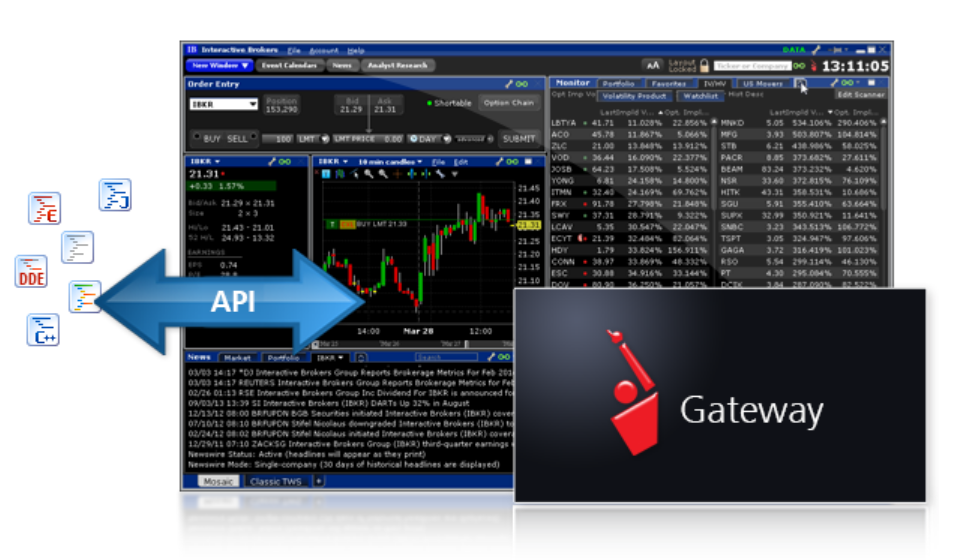
Thanks to the Python API Interactive Brokers integration, you can trade automatically with Python code. In technical terms, it is a protocol for exchanging data with Interactive Broker’s (IB) servers and special software applications. By acting as a bridge, the API permits the receipt of real-time or archived data, the transmission of orders from scripts or customized software, and many other useful applications.

It’s likely that if you’re reading this blog, you’ve already researched Interactive Brokers (IB) and found that it has great online reviews. The broker is well-known for its extensive marketplace selection and affordable commission rates. Visit Interactive Brokers for more information.
What You Can Do with the Python API Interactive Brokers
By becoming proficient with the native Python API, you can improve the circumstances. You can accomplish a few of the following tasks:
- Independent Trading – Whether you’re looking for a fully automated solution or something more manageable, the API offers a starting point for connecting your automation scripts with Interactive Brokers.
- Build a Customized Trading Terminal – Interactive Brokers offers a great and feature-rich TWS. If you would prefer a different method of executing trades, the API can be used to quickly create a custom terminal.
- Assemble Historical Data – Access to historical data is a prerequisite for the majority of automated trading systems. IB offers streaming data and generous API rate limits.
- Create Custom Indicators – TWS’s common, widely-used built-in technical indicators make it easy to get started. However, if you want to make your own unique indicators, the API is your best bet. Python’s extensive library system is another advantage. If you’re interested in machine learning or sentiment analysis, for example, the API offers a way to connect to amazing Python libraries covering these topics.

- Personalized Alerts and Notifications – Do you need an alert that TWS cannot deliver? There’s a good chance you’ll be successful using Python.
Official API vs. Third-Party Libraries
The IB Python native API was officially developed and is maintained by Interactive Brokers. This ensures that there will be no errors and a steady connection to the IB servers.
In contrast, code wrappers and libraries such as IBridgePy and IbPy are not officially supported by IB because they were developed by third parties.
IB-insync is a widely used third-party framework. It uses asynchronous methods of communication with the native API to increase efficiency. It also simplifies the process of obtaining data via the API.
How to Set Up the IB Native Python API
There are four easy steps to setting up a connection to the Interactive Brokers’ Python API:
- Create an account with IB; they offer top-notch test demo accounts. If you decide to connect to a live account, TWS offers a read-only option for the API, which is useful for first-time testing and learning.
- Download the native Python API for IB. It is now simpler to connect to and interact with IB’s server-linked client thanks to these Python script files.
- Install TWS or the IB Gateway client. You may already be familiar with Interactive Brokers’ standard trading client, TWS. An alternative is to use the Interactive Brokers Gateway client. Using TWS is a good idea when first testing your script because it provides visible proof of any activity on your account. It’s easy to switch to the Gateway later on.
Get Started with Python Trading
The Interactive Brokers Python API opens up powerful possibilities for automated trading, data analysis, and custom tool development. Whether you are a beginner or an experienced trader, Python provides the flexibility you need to build sophisticated trading systems.
Download IBridgePy and start trading with Python today.
The Python API Interactive Brokers offers enables traders to build custom applications. By mastering Python API Interactive Brokers integration, you can unlock powerful automation capabilities.